
I’m not an expert. Yet. But I’ve spent way too many nights scrolling through skincare TikTok, buying products that promised to “fix” my skin, and then wondering why nothing worked. Turns out, the answer was embarrassingly simple: I never actually knew my skin type. I was just guessing.
If you’ve ever stood in the skincare aisle wondering whether that serum is even meant for you, this one’s for you. Let’s figure out how to find out your skin type — for free, at home, in about five minutes.
Why Knowing Your Skin Type Actually Matters
Every “holy grail” product you’ve heard about only works if it’s right for your skin. A moisturizer that’s perfect for dry skin can make oily skin feel like a grease slick by noon. A mattifying gel that’s amazing for oily skin can leave dry skin tight and flaky. So before you buy one more product, let’s get this sorted.
There are five main categories: oily, dry, combination, normal, and sensitive. Most people fall somewhere between two of these, and that’s completely normal — literally.
The 5-Minute Skin Type Test at Home
This is the easiest, most reliable way to check skin type without spending a rupee.
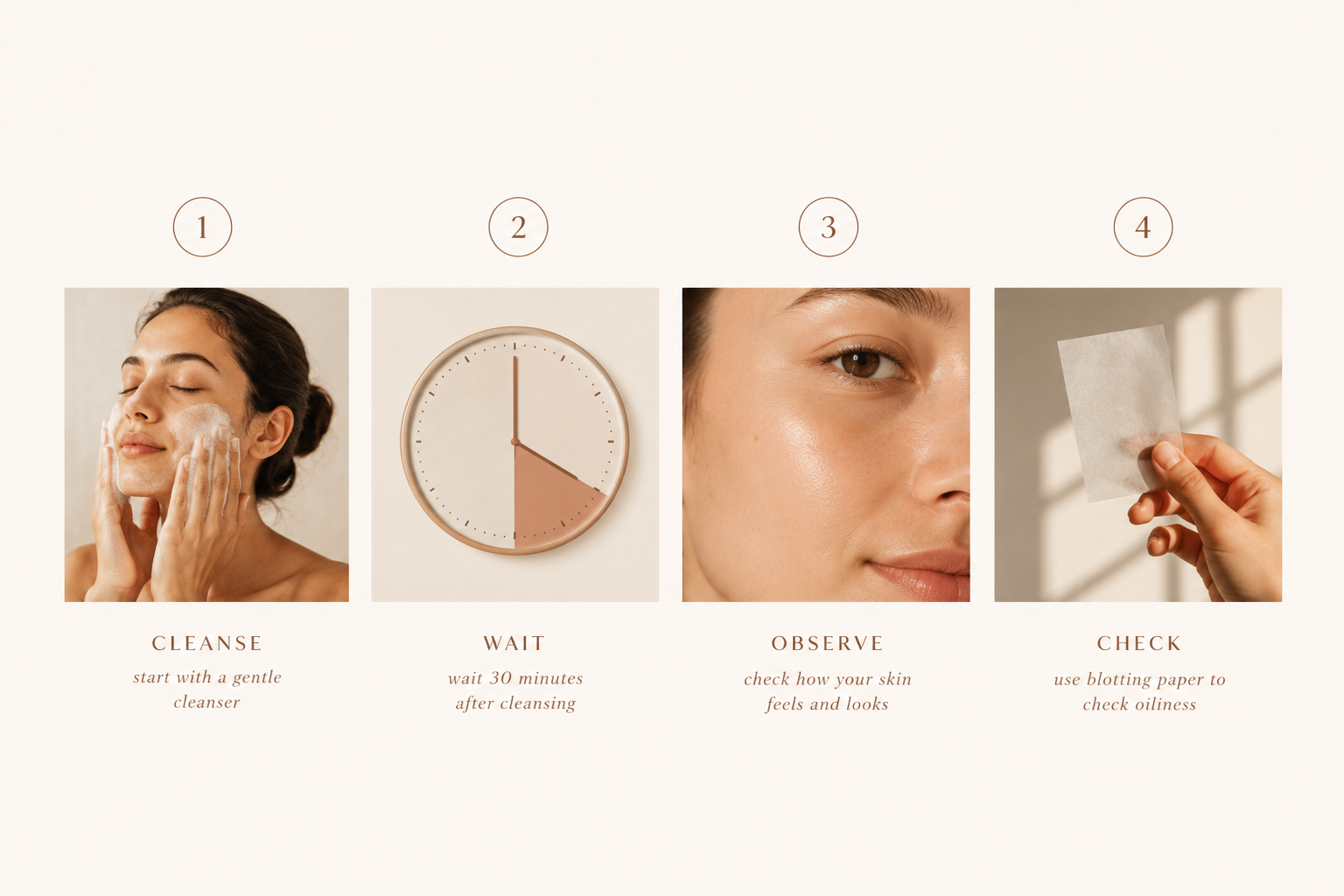
Step 1: Cleanse your face. Wash with a gentle cleanser to remove any makeup, oil, dirt, or leftover product. Pat dry with a clean towel.
Step 2: Wait it out. Leave your skin completely bare — no moisturizer, no serum, nothing — for 30 to 60 minutes. If you’re short on time, even 20-25 minutes will give you a decent read.
Step 3: Observe. After the wait, look closely at your skin, especially your T-zone (forehead, nose, chin) and your cheeks. This is the moment of truth.
Step 4: Do the blotting sheet check (optional but handy). Press a blotting paper or a plain tissue gently onto different parts of your face. Hold it up to the light and see how much oil transferred.
Now that you’ve completed the blotting paper test, compare your results with the guide below. Focus on where oil appears and how your skin feels, as both are important for identifying your skin type. Remember that sensitive skin can occur alongside any other skin type.

That’s it. That’s the whole test. No apps, no dermatologist visit required, just five minutes and a mirror.
Signs of Oily Skin
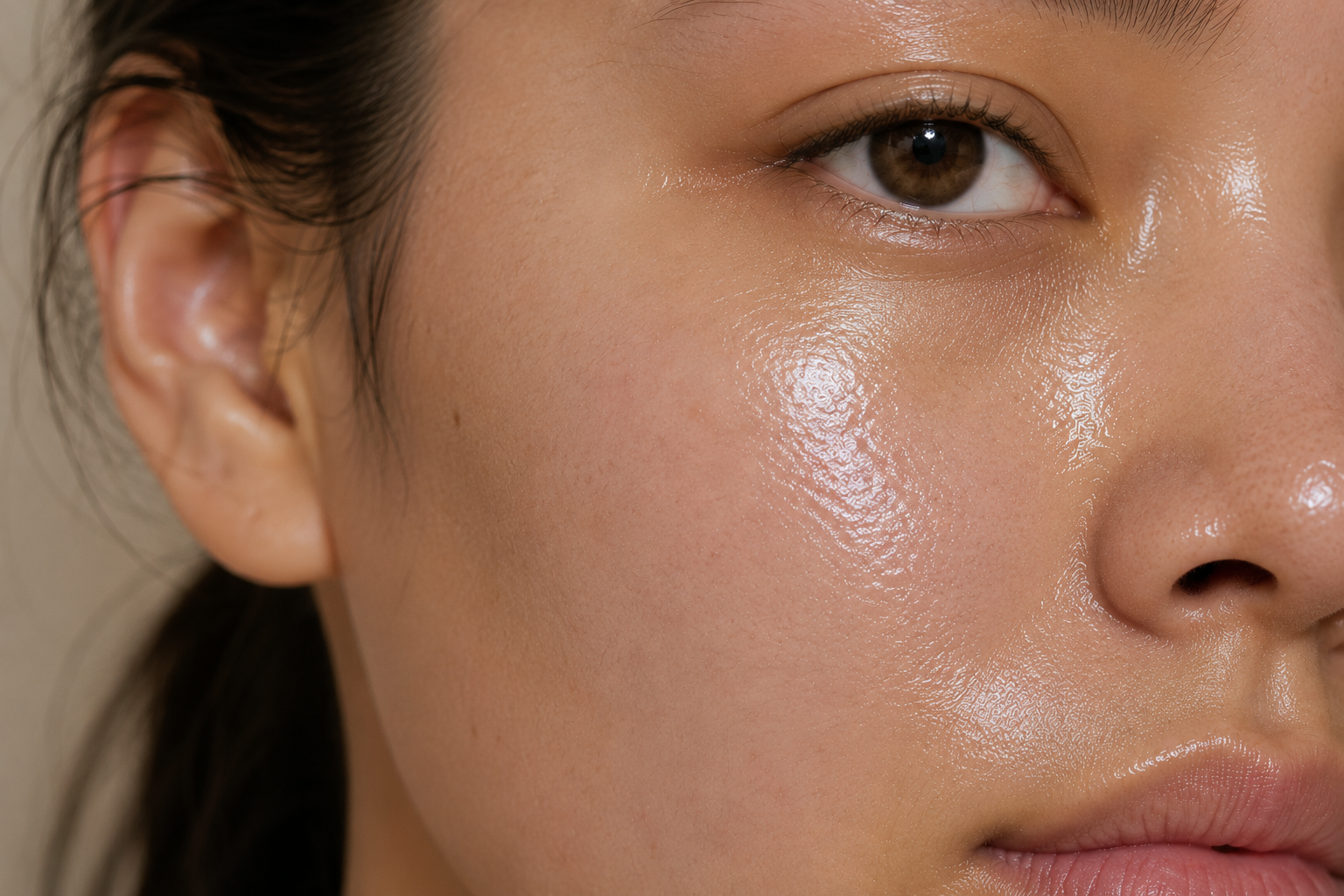
Wondering how to tell if you have oily skin? Here’s what to look for:
- Your face looks shiny, especially by midday, even right after washing
- Enlarged, visible pores, particularly around the nose and forehead
- Frequent blackheads or breakouts
- Makeup tends to slide off or get patchy a few hours in
- Your blotting sheet comes back soaked
If most of this sounds familiar, you’re likely dealing with oily skin, and your routine should focus on lightweight, oil-free, non-comedogenic products.
Signs of Dry Skin
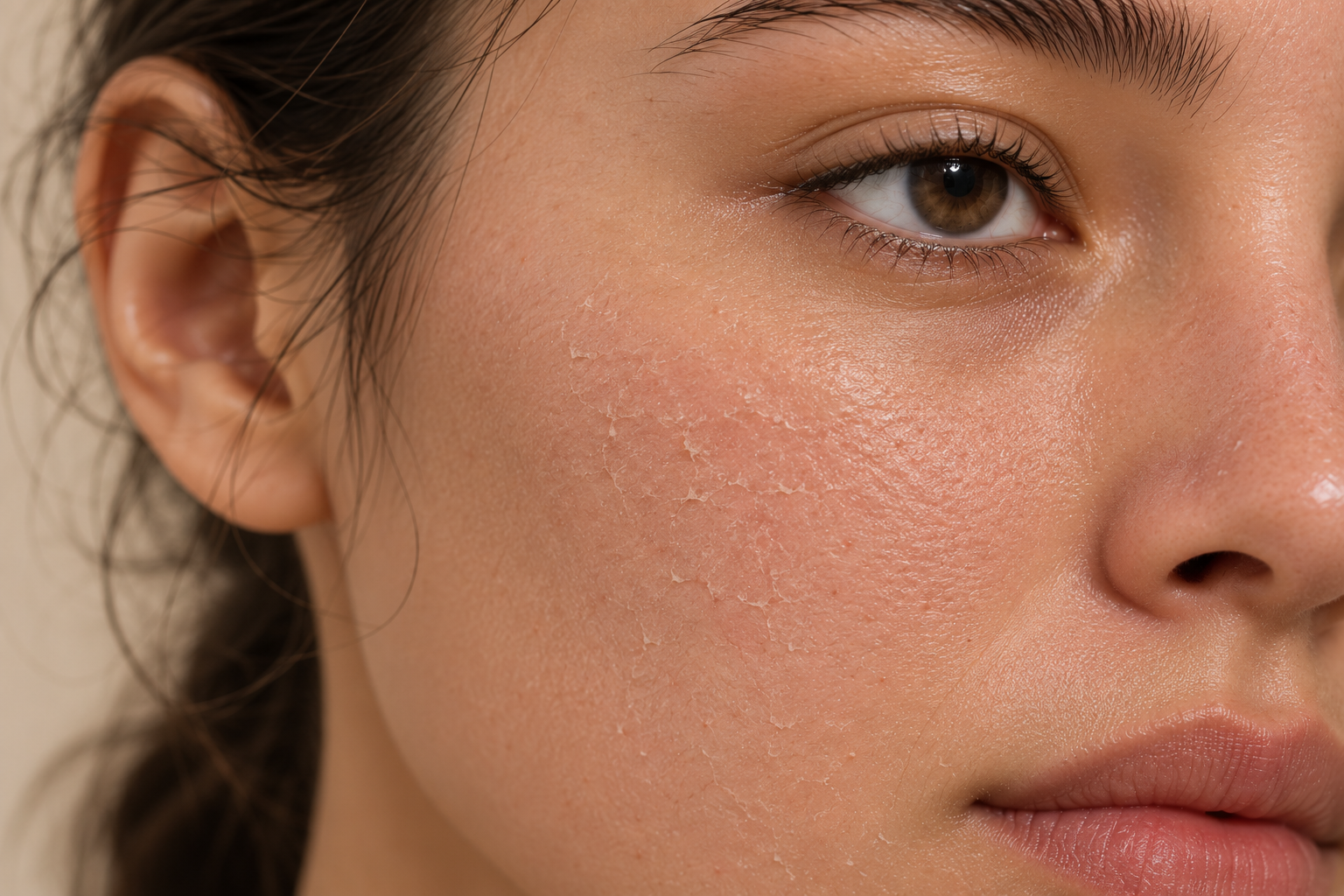
On the flip side, here’s how to know if you have dry skin:
- Skin feels tight, especially after cleansing
- Visible flaking or rough patches
- Fine lines appear more noticeable
- Skin rarely looks shiny, even by the end of the day
- Products seem to absorb instantly, like your skin is “drinking” them
Dry skin needs richer, more hydrating formulas with ingredients that lock in moisture rather than strip it away.
What About Combination Skin?
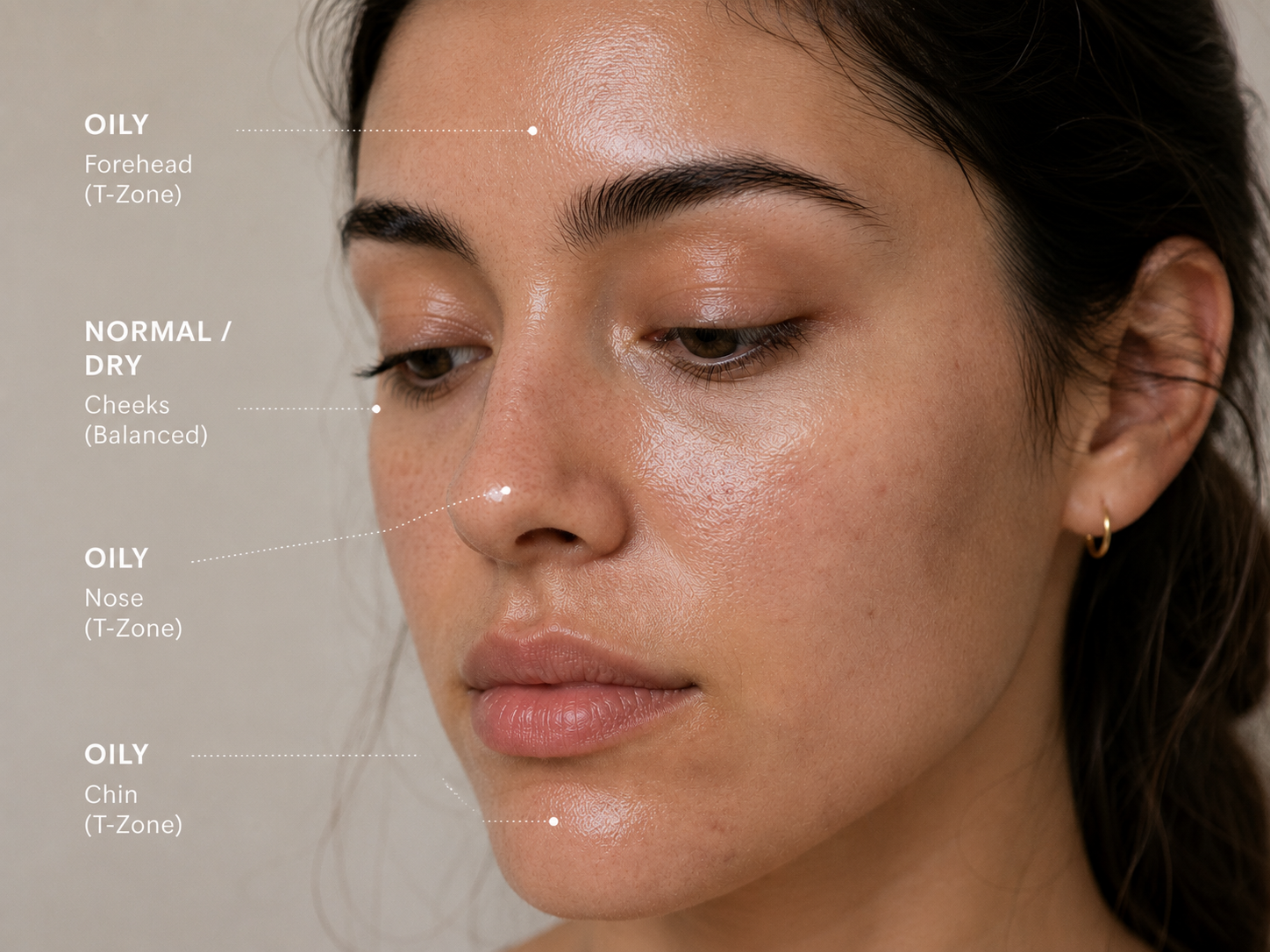
Combination skin is basically your face living two different lives. Your T-zone (forehead, nose, and chin) tends to get oily, while your cheeks stay normal or even dry. This is one of the most common skin types, so if your test results looked mixed, you’re in good company. Skincare for combo skin usually means balancing — using lighter products on the oily zones and slightly richer ones on the drier areas.
And Normal Skin?
If your skin wasn’t shiny, wasn’t tight, didn’t flake, and just felt… fine, congratulations, you likely have normal skin. It’s well-balanced, not too oily and not too dry, with minimal sensitivity. Lucky you — but that doesn’t mean you can skip a routine. Normal skin still needs consistent care to stay that way.
Personalized Skincare Starts With This One Step
Here’s the truth: personalized skin care isn’t about buying whatever’s trending. It starts with actually knowing your skin type first, and building a routine around that. Once you know what you’re working with, everything else, from cleanser to moisturizer to SPF, becomes so much easier to choose.

A Few Things to Keep in Mind
Your skin type isn’t permanent. It can shift with the seasons, your age, hormones, stress levels, and even the products you’re currently using (over-drying your skin can actually make it produce more oil, ironically). So it’s worth doing this test every few months, especially when the weather changes.
Also, don’t judge your skin type right after a workout, a hot shower, or a spicy meal. Wait until your skin is in its “resting state” for the most accurate read.
Final Thoughts
Figuring out your skin type doesn’t need a dermatologist appointment or an expensive app. Five minutes, a clean face, and a bit of patience is genuinely all it takes. Once you know what you’re dealing with, skincare stops feeling like guesswork and starts feeling like it’s actually made for you.
If you try this test, I’d love to know what you find out. Drop it in the comments, or tag Daily Radiant if you post about it. We’re all figuring this out together.


How to Get Your Kids to Eat Green Vegetables at Every Meal
Nothing quite compares to a parent’s battle at the dinner table. On one side, you’ve got a parent desperate to get their kids to eat green vegetables. On the other side, there’s a kid armed with all the stubborn willpower of two large armies.

7 Health Tips That Will Help Single Mothers Become Better Parents
Raising a child is a difficult task even in the best circumstances, but doing so for single mothers without the help of the father makes it a monumental task no matter how great your parenting skills. Being a single parent adds stress and fatigue to raising your child.

Losing Postnatal Baby Weight with Coolsculpting
Is it actually possible to lose weight and especially post-natal excess fat with the power of the cold? You would be very surprised to hear that the answer to that question is a resounding “yes”.